As a longtime CTO and Chief Product Officer, I’ve seen firsthand the toll that constant work can take on individuals and teams. Many of us in the tech industry wear our long hours as a badge of honor, believing that being available 24/7 is the key to success. But here’s the truth: it’s not. In fact, it’s doing more harm than good.
The Myth of 24/7 Productivity

We’ve all been there. You’re at dinner with your family, but your mind is on that urgent email from a client. You’re trying to work out, but you’re constantly checking Slack for updates. Every time your phone notification sounds, you interrupt what you are doing and check your messages. You think you’re being productive, but in reality, you’re stuck in the “hamster wheel of constant connectivity.”
Research shows that this always-on mentality is actually counterproductive. A study published in the Journal of Occupational Health Psychology found that expectations to monitor work email during non-work hours are detrimental to employee and significant other well-being. This constant state of alertness can lead to burnout, reduced creativity, and ultimately, poorer job performance.
In a previous exploration of productivity, I discussed the importance of structuring your day effectively in “An Executive’s Daily Routine for Productivity and Balance“. This approach can help combat the pitfalls of constant connectivity.
The Power of Being Present
So what’s the alternative? It’s simple, but not always easy: be present in the present moment.
This means that when you’re working, you’re fully focused on work. But when you’re not working – whether you’re spending time with family, exercising, or simply relaxing – you’re fully present in that activity.
Dr. Jon Kabat-Zinn, the founder of Mindfulness-Based Stress Reduction, defines mindfulness as “paying attention in a particular way: on purpose, in the present moment, and non-judgmentally”. This practice of mindfulness has been shown to have numerous benefits, including reduced stress, improved focus, and increased creativity.
The Benefits of Taking Breaks
You might be thinking, “But I have so much to do. I can’t afford to take breaks!” I get it. I’ve been there. But here’s the thing:
Taking breaks isn’t just good for your mental health — it’s key to your productivity and innovativeness at work.
A study from the University of Illinois found that brief diversions from a task can dramatically improve one’s ability to focus on that task for prolonged periods. In other words, taking regular breaks can actually help you work more efficiently.
Research published in the journal Cognition showed that even brief breaks can help you stay focused on a task. The study found that participants who took short breaks during a 50-minute task performed better than those who worked straight through.
One effective way to incorporate breaks is through regular exercise. In “Make Exercise Your Daily Habit“, I delve into the importance of prioritizing physical activity, which can serve as a productive break from work.
Practical Tips for Staying Present

So how can we put this into practice? Here are a few strategies I’ve found helpful:
- Set clear boundaries: Decide on your work hours and stick to them. Outside of those hours, be fully present in your personal life or whatever else you are committed to doing at that time.
- Practice mindfulness: Even a few minutes of mindfulness meditation each day can help you stay more focused and present.
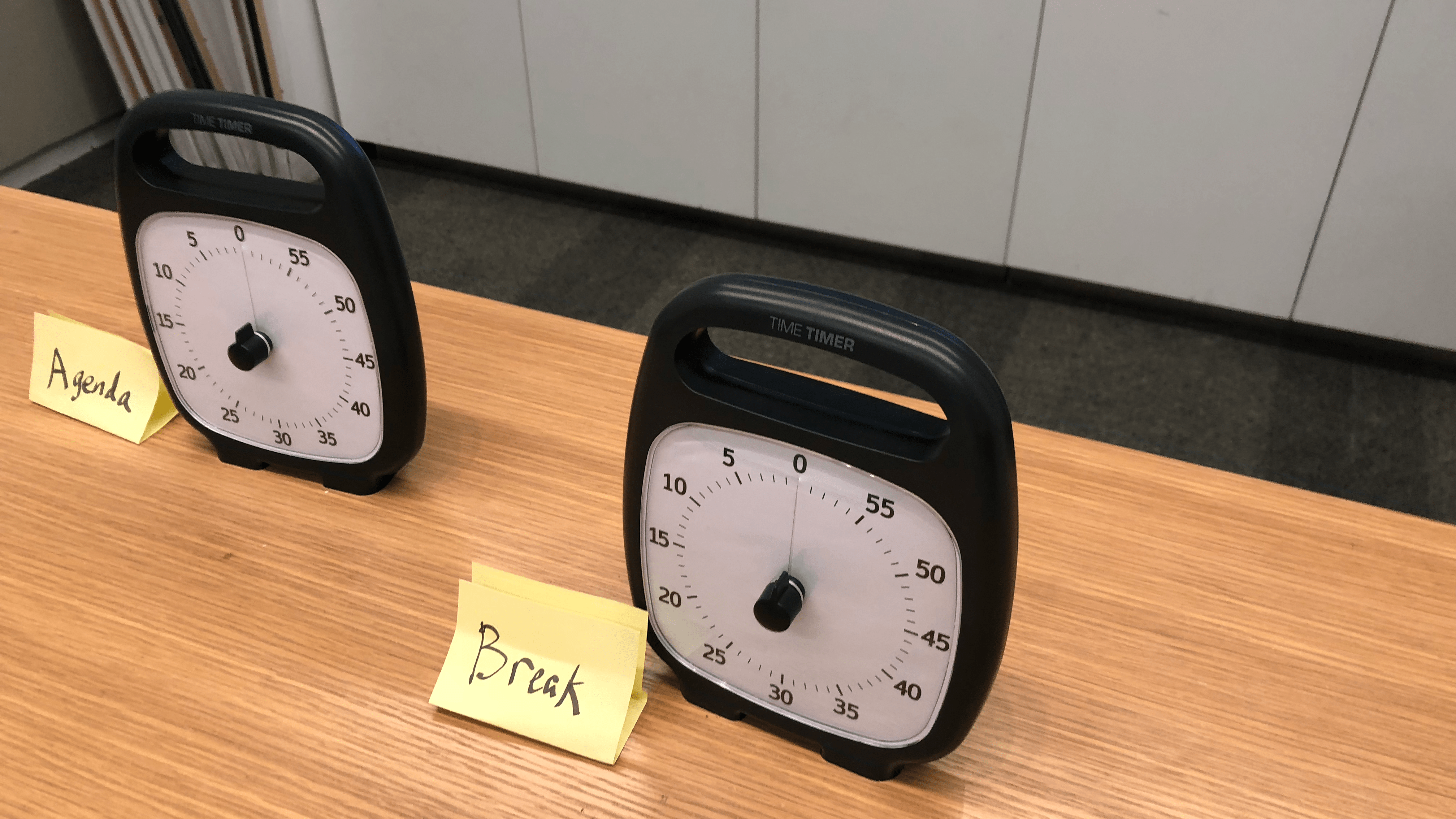
- Take regular breaks: Use techniques like the Pomodoro Technique (25 minutes of focused work followed by a 5-minute break) to structure your workday.
- Unplug during personal time: When you’re with family or friends, put your phone away. Be fully present in those moments.
- Prioritize sleep and exercise: These are crucial for maintaining focus and productivity. Don’t sacrifice them for work.
In “The Evolution of the 50/25 Meeting Format“, I discuss how rethinking traditional meeting structures can create natural breaks and improve overall productivity.
The Innovation Advantage
Here’s something else to consider: when we’re constantly working, we’re not giving our brains the space they need to be truly innovative. Some of the best ideas come when we’re not actively trying to solve a problem.
Research has shown that our brains are actually very active during periods of rest, engaging in important processes like memory consolidation and problem-solving. A study published in Science found that during sleep, our brains engage in complex activities that support memory formation and learning. By giving ourselves breaks from work, we’re actually allowing our brains to work on problems in the background.
This concept ties into the idea of focusing on inputs rather than just outcomes, which I explore in “Beyond Outcomes: Why Great Leaders Prioritize Inputs“. By giving ourselves time to rest and recharge, we’re investing in our ability to produce better outcomes.
The Mindfulness Advantage
The benefits of mindfulness extend beyond stress reduction. Research from the Mindfulness Center at Brown University has shown that mindfulness practices can have significant impacts on health and cognitive function. A meta-analysis published in the Journal of Cognitive Enhancement found that mindfulness training improved working memory capacity and some aspects of attention.
In the corporate world, mindfulness programs have gained traction. The Search Inside Yourself program, which originated at Google in 2007, is a prime example of how mindfulness training can be applied in a business context to improve focus, creativity, and overall well-being.
The Cost of Stress
The impact of constant work and stress goes beyond individual well-being. According to the American Institute of Stress, job stress costs U.S. industry more than $300 billion annually in absenteeism, turnover, diminished productivity, and medical, legal, and insurance costs. By prioritizing presence and balance, we’re not just helping ourselves – we’re contributing to a more productive and sustainable work environment.
Conclusion
As leaders in the tech industry, we have a responsibility not just to our companies, but to our teams and to ourselves. By modeling healthy work habits and emphasizing the importance of being present, we can create more productive, innovative, and ultimately happier work environments.
Remember, the goal isn’t to work more hours — it’s to make the hours we work more effective. By being fully present in each moment, whether that’s at work or in our personal lives, we can achieve that goal.
In “Activities, Outputs, and Outcomes — A framework for your job“, I discuss how focusing on meaningful outcomes rather than just activities can lead to more effective work. This approach aligns well with the idea of being present and avoiding constant, unfocused work.
So the next time you find yourself reaching for your phone during family dinner or thinking about work during your workout, pause. Take a deep breath. And choose to be present in that moment. Your work, your relationships, and your wellbeing will all be better for it.
Finally, remember that effective communication is key to maintaining a healthy work-life balance. In “Facilitating Team Communication by AI Prompting Humans“, I explore innovative ways to streamline team communication, which can help reduce the need for constant connectivity.
Certainly! Here’s a “References” section that includes links to support the claims made in the article:
References
- Becker, W. J., Belkin, L. Y., & Tuskey, S. (2018). Exhausted, but Unable to Disconnect: After-Hours Email, Work-Family Balance and Identification. Journal of Occupational Health Psychology, 23(2), 244-254. https://psycnet.apa.org/doiLanding?doi=10.1037%2Focp0000095
- Lleras, A., & Pashler, H. (2011). Brief and rare mental “breaks” keep you focused: Deactivation and reactivation of task goals preempt vigilance decrements. Cognition, 118(3), 439-443. https://www.sciencedirect.com/science/article/abs/pii/S0010027710002994
- Kabat-Zinn, J. (2003). Mindfulness-Based Interventions in Context: Past, Present, and Future. Clinical Psychology: Science and Practice, 10(2), 144-156. https://onlinelibrary.wiley.com/doi/abs/10.1093/clipsy.bpg016
- Poe, G. R., Nitz, D. A., McNaughton, B. L., & Barnes, C. A. (2000). Experience-dependent phase-reversal of hippocampal neuron firing during REM sleep. Brain Research, 855(1), 176-180. https://www.sciencedirect.com/science/article/abs/pii/S0006899399022359
- Brown University Mindfulness Center. https://mindfulness.sph.brown.edu/
- Lao, S. A., Kissane, D., & Meadows, G. (2016). Cognitive effects of MBSR/MBCT: A systematic review of neuropsychological outcomes. Consciousness and Cognition, 45, 109-123. https://www.sciencedirect.com/science/article/abs/pii/S1053810016301416
- Search Inside Yourself Leadership Institute. https://siyli.org/about/
- American Institute of Stress. Workplace Stress. https://www.stress.org/workplace-stress
- Rajiv Pant. (2023). An Executive’s Daily Routine for Productivity and Balance. /blog/2023/08/16/an-executives-daily-routine-for-productivity-and-balance/
- Rajiv Pant. (2020). Make Exercise Your Daily Habit. /blog/2020/05/30/make-exercise-your-daily-habit/
- Rajiv Pant. (2023). The Evolution of the 50/25 Meeting Format: Why Starting Late is the New On-Time. /blog/2023/09/17/the-evolution-of-the-50-25-meeting-format-why-starting-late-is-the-new-on-time/
- Rajiv Pant. (2023). Beyond Outcomes: Why Great Leaders Prioritize Inputs. /blog/2023/12/02/beyond-outcomes-why-great-leaders-prioritize-inputs/
- Rajiv Pant. (2018). Activities, Outputs, and Outcomes — A framework for your job. /blog/2018/12/09/activities-outputs-and-outcomes-a-framework-for-your-job/
- Rajiv Pant. (2024). Facilitating Team Communication by AI Prompting Humans: Introducing Daily Team Sync. /blog/2024/07/21/facilitating-team-communication-by-ai-prompting-humans-introducing-daily-team-sync/