AI-generated emails are pouring into our inboxes. Language models like Meta Llama, Anthropic Claude, OpenAI ChatGPT, and Google Gemini are becoming increasingly sophisticated, occasionally producing text that can be difficult to distinguish from human authored content.
Here are some tips based on my experience to help you spot the telltale signs that an email might have been crafted by an AI language model. They can be used to recognize patterns in emails generated by LLMs in their default settings. The signs below may not be present in emails generated using LLMs that are fine-tuned or use sophisticated prompts to guide the LLM’s writing style.
Note: These patterns may also appear in human-authored text. Context is crucial. Be alert to abrupt style changes within a conversation or writing that seems out of place given the writer’s usual tone or background. Such inconsistencies often signal AI involvement.
1. Generic and Formulaic Language
AI-generated emails rely on common phrases or expressions that lack a personal touch. Look out for:
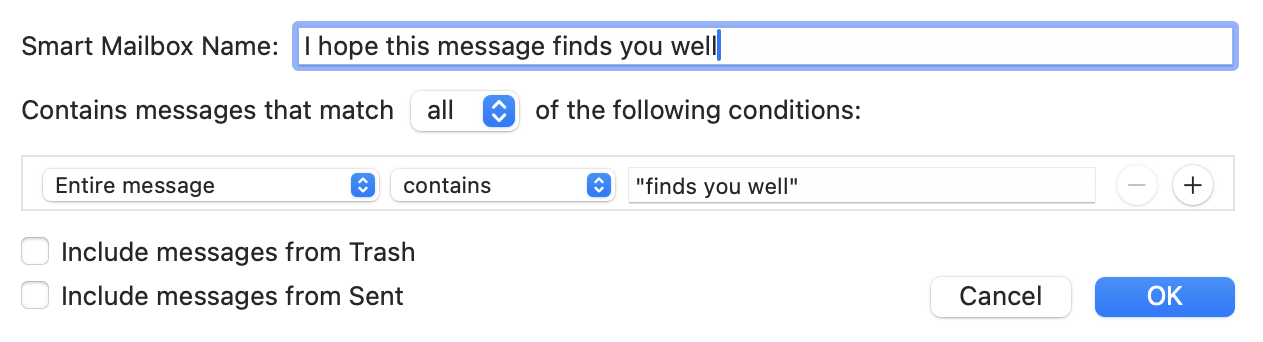
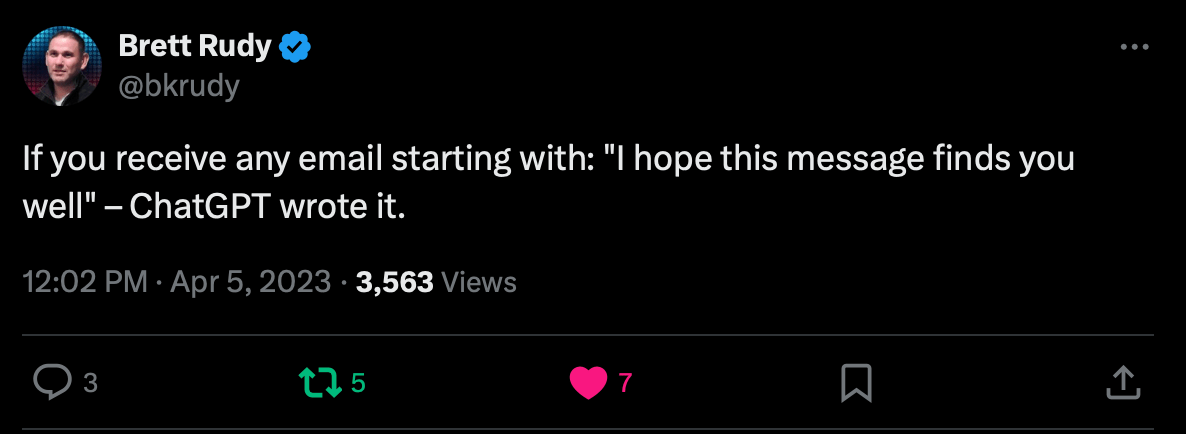
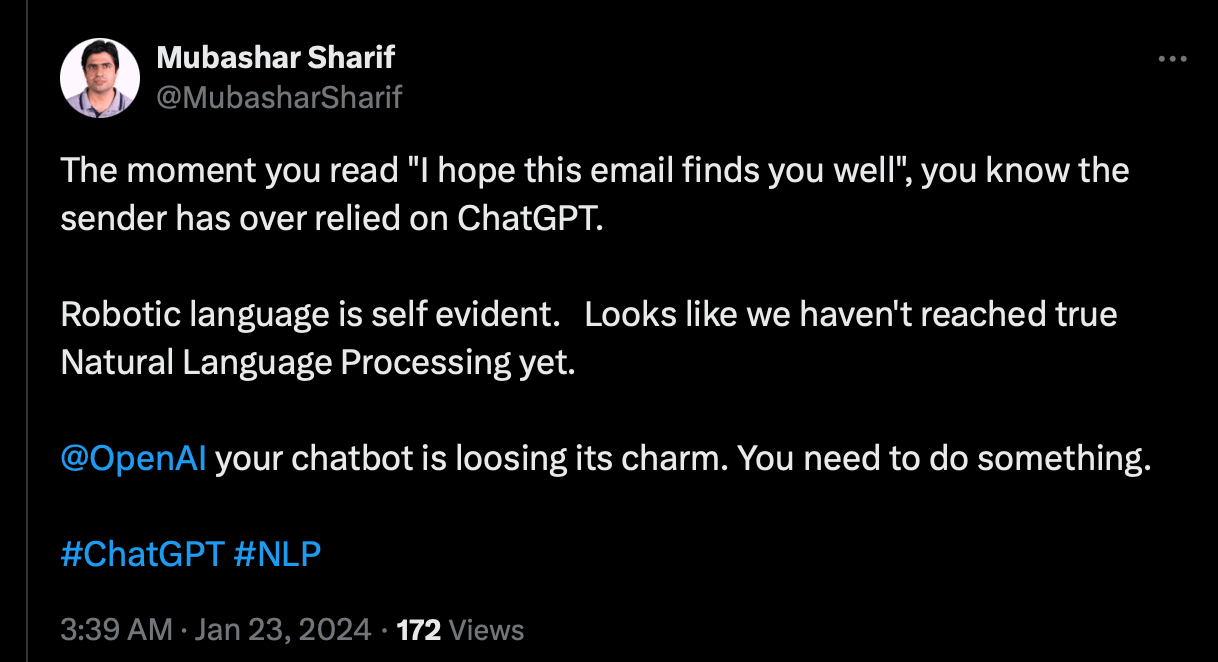
- Overused openings like “I hope this message finds you well.“
- Generic expressions such as “warm and heartfelt welcome,” “embark on a new school year,” or “make this year a memorable one.”
- Phrases that sound nice but lack specificity, like “working side by side” or “fostering a strong sense of community.”
See these tweets:
2. Overly Formal and Polite Tone
While politeness is appreciated, AI tends to err on the side of excessive formality:
- Phrases like “Please feel free to reach out to us” or “Your support, involvement, and engagement are invaluable.”
- An overall tone that feels more like a corporate memo than a personal communication.
3. Lack of Personal Voice or Specific Details
Human-written emails often include personal anecdotes or specific references. AI-generated emails typically:
- Stick to general statements that could apply to almost any situation.
- Lack unique examples or personal touches that reflect the writer’s individual experiences.
- Avoid mentioning names of specific people, events, or past interactions.
4. Repetitive Structure and Redundant Statements
AI models often repeat similar ideas in different words. (Unfortunately, some humans like me tend to do this too, to reinforce our point by repetition, or when we feel someone isn’t listening. So YMMV on how useful recognizing this pattern alone is.)
- Look for sentences that convey the same message multiple times, like “support, involvement, and engagement” all in one phrase.
- Notice if paragraphs seem to rehash the same points without adding new information.
5. Perfect Grammar and Lack of Typos
While good grammar is generally positive, be wary of emails that are too perfect:
- No spelling mistakes, typos, or grammatical errors whatsoever.
- Consistently flawless sentence structures throughout a long email.
6. Overuse of Positive Language and Enthusiasm
AI-generated content often overcompensates with excessive positivity:
- An abundance of enthusiastic phrases like “thrilled to have you,” “great excitement and anticipation,” or “positive and nurturing environment.”
- Consistent upbeat tone that may feel insincere or overly polished.
7. Structured Bullet Points and Clear Formatting
AI loves organization. (No need to tell me, I know already: So do OCD people like me. I’m a fan of structuring text especially into lists and checklists. I’m not an AI to the best of my knowledge. Unless we are living in simulation. But I digress.)
- Look for neatly structured bullet points that present information in a very logical, perhaps overly organized manner. (I recognize the irony here.)
- Perfect formatting throughout the email, which might be less common in quick, human-written communications.
8. Overuse of Certain Pronouns
AI-generated emails might overuse certain pronouns to sound inclusive:
- Excessive use of “we” throughout the email, potentially to avoid revealing a specific individual’s perspective.
9. Generic Calls to Action and Conclusions
The endings of AI-generated emails often feel formulaic:
- Generic sign-offs without any personal touch.
- Calls to action that sound motivational but lack specificity, such as “Let’s make this year a memorable one filled with teamwork, enthusiasm, and success!”
10. Misplaced Modern Touches
In an attempt to seem current, AI might include elements that feel out of place:
- Emojis in otherwise formal emails, like a bookmark 🔖 emoji in a school administrator’s message. (I used to do this, but nowadays I generally avoid using emojis in emails and blog posts so people don’t mistake my emails to be AI-generated.)
- References to modern technology or trends that don’t quite fit the overall tone of the email.
11. Comprehensive Coverage Without Depth
AI-generated emails often try to cover all bases without going into depth on any particular topic:
- Touching on multiple subjects (welcome, team spirit, communication channels, etc.) without delving deeply into any of them.
- Providing a broad overview that lacks the focus a human writer might have on specific priorities or concerns.
12. Lack of emotions, opinions, or anything controversial or politically incorrect
AI is (I won’t use the word here to avoid offending some people, but you know what I mean)
- An AI generated email these days is extremely unlikely to say something even potentially offensive to anyone. For example: what Amazon’s since discontinued NowNow service (powered by humans, not AI) once told me.
It is likely that within a few months as LLMs continue to improve, some of the above will no longer apply.
Conclusion (Yeah, I know, AI often writes conclusions too, but I’ve been doing this longer than LLMs have been around)
While no single factor definitively proves an email was written by an AI, the presence of multiple indicators should raise suspicion.
Context is key – what might be normal in one setting could be a red flag in another.
As AI technology continues to advance, staying vigilant and developing a keen eye for these subtle cues will become increasingly important in distinguishing between human-written and AI-generated content.
As for philosophical questions like why should you care if an email was written by a human, an AI, or a human augmented by at AI — or what qualifies as AI generated vs. original human creation — whether there is even such a thing — those are beyond the scope of this blog post. I may address them in a future article.
I still write my emails myself. When helpful, I do run my writing by my Ragbot.AI assistant and ask it to review and critique my work. Then, based on my determination, I incorporate my personalized AI’s feedback into my content. But, I’m the author and final editor of all my content. AI’s role in my writing is to help me do research and non-final editing with me.
When you receive an email that reads “I hope this message finds you well,” share this blog post with the sender.
Update (November 2025)
Since writing this post, I’ve expanded the ideas here into a comprehensive open-source framework: AI Content Quality: An Open-Source Framework for Writing That Doesn’t Read Like AI. It covers 27 patterns across five categories — going well beyond emails to address blog posts, documentation, marketing copy, and any other AI-assisted content. It also includes a detection confidence framework, before/after examples, and prompts you can use with any LLM to check content against the guide. If you found the 12 signs in this post useful, the full guide is the next step.
Further Reading
If you enjoyed reading this blog post and found it useful, you will also like:
- AI Content Quality: An Open-Source Framework for Writing That Doesn’t Read Like AI — my comprehensive open-source guide expanding on the ideas in this post
- The talk I gave (video) at Applause about how The Wall Street Journal is fighting fake news using AI and crowdsourcing.
- How news organizations combat fake news generated and spread using artificial intelligence