The client’s request seemed impossible: “We need to modernize our entire legacy system, build two new products, and cut our engineering spend by 20%—all within six months.” Five years ago, I would have gently explained the iron triangle of software development—you can have it fast, good, or cheap, pick two. Today, as we work to evolve Flatiron Software and Snapshot AI for the AI era, we’re regularly delivering what once seemed impossible.
The secret isn’t working longer hours or hiring more engineers. It’s fundamentally reimagining how engineering services are delivered in the age of AI. When a single engineer paired with the right AI tools can outperform entire traditional teams, the old models of staff augmentation and time-based billing become not just outdated but actively harmful to client success.
This transformation goes deeper than productivity gains. It’s reshaping how we measure engineering effectiveness, how we structure teams, and even what we mean by “engineering services.” The companies that understand and adapt to these changes will thrive. Those that cling to traditional models will find themselves competing against organizations that operate at fundamentally different levels of efficiency and innovation.
[This exploration builds on my broader examination of technology leadership in the age of generative AI. While that piece covers the evolution of CTO and CPO roles across industries, here I’ll dive deep into how engineering services and productivity measurement must transform.]
The Great Unbundling: From Bodies to Capabilities
Traditional engineering services operated on a simple model: clients needed more engineering capacity, so service providers supplied engineers. Success was measured in billable hours and staff utilization rates. The more engineers working more hours, the more revenue generated. This model made sense when human labor was the fundamental constraint in software development.
But this model creates perverse incentives:
Service providers have traditionally been rewarded for inefficiency—the longer a project takes, the more revenue it generates. Clients pay for activities rather than outcomes. And both parties focus on quantity of resources rather than quality of results.
AI breaks this model completely. When an AI agent can generate in hours or even minutes what previously took days of human effort, billing by the hour becomes absurd. More fundamentally, the question shifts from “How many engineers do we need?” to “What capabilities do we need to achieve our outcomes?”
The Capability Stack Revolution
At Flatiron Software, we are moving towards what we call the “Capability Stack” approach. Instead of only offering engineers, we also offer capabilities—specific abilities to achieve technical outcomes. Each capability might be delivered by humans, AI, or (most commonly) a combination of both. That pivot started when Sezer proved how an automated deployment pipeline could turn outcome commitments from risky promises into routine deliveries.
“Remote work plus AI tooling ends the myth that innovation lives in one ZIP code,” Sezer notes. “The best engineers can work from anywhere now, and Snapshot gives leaders the data to recognize performance wherever it happens.”
Consider a recent engagement with a fintech client. Had it been five years ago, they’d have requested a full development team of at least four engineers for this core platform modernization to maintain their market leadership position. Under the traditional model, we would have staffed those engineers and likely delivered in about five months.
Instead, we mapped their needs to five discrete capabilities. First, rapid system analysis and understanding, where our Snapshot AI tool automatically analyzed their existing codebase, data structures, and API patterns, minimizing the time our engineers needed to comprehend their complex systems. Second, intelligent integration architecture, combining AI-generated integration specifications with human expertise to design seamless connections with their existing APIs and infrastructure. Third, AI-enhanced user experience design, where AI systems optimized interface patterns and workflow logic while humans crafted the strategic user journey improvements. Fourth, parallel deployment strategy and execution, using AI to model system interactions and humans to orchestrate a gradual rollout that could replace legacy components incrementally without disruption. And finally, full-stack AI implementation, where AI capabilities were embedded across backend processing, middleware logic, and frontend interactions to create a dramatically improved user experience that was both more powerful and simpler to use.
The results demonstrated the power of AI-augmented engineering. We delivered the first beta version in three months with a team of two full-stack engineers—including one with a Ph.D. in artificial intelligence—and one project manager working 30% time, all working with AI augmentation throughout the development process. Our estimate is that client achieved approximately 3.6x productivity improvement while investing significantly less than traditional staffing would have required. Even if you assume my 3.6x estimate is biased and halve it, we definitely have at least 1.8x productivity improvement. Also significant is that they gained a scalable, future-ready platform rather than just an updated version of their existing system.
This engagement exemplifies how the capability stack approach delivers superior outcomes by focusing on what needs to be accomplished rather than how many people need to accomplish it.
The New Engineering Primitives
This capability-based model requires rethinking the fundamental primitives of engineering services. Traditional primitives were roles—frontend developer, backend engineer, DevOps specialist. The new primitives are capabilities that combine human and AI strengths.
Code Archaeological Services represent one such primitive. AI systems excel at parsing and understanding large legacy codebases, identifying patterns and dependencies no human could track. Human experts provide business context and make judgment calls about what to preserve versus reimagine. Together, they can decode decades-old systems in days rather than months.
Synthetic Development Environments offer another primitive. AI can generate entire development environments tailored to specific project needs, complete with appropriate frameworks, libraries, and configurations. Human engineers define requirements and constraints, while AI handles the tedious setup and configuration that traditionally consumed weeks of effort.
Intelligent Code Generation goes beyond simple autocomplete. Modern AI systems can generate entire subsystems from high-level specifications. Human engineers focus on architecture, interface design, and business logic while AI handles implementation details. The human remains responsible for quality and correctness but operates at a fundamentally higher level of abstraction.
Automated Quality Assurance combines AI’s ability to generate comprehensive test suites with human judgment about edge cases, user experience, and business impact. The combination delivers both breadth and depth of quality assurance that neither could achieve alone.
Measuring What Matters: The Death of Traditional Metrics
“How do we measure productivity when an AI can write a million lines of code in seconds?” This question from a Fortune 500 CTO crystallized the measurement challenge facing engineering organizations. Traditional metrics—lines of code, commit frequency, story points—become meaningless when AI accelerates raw output by orders of magnitude.
At Snapshot AI, we’re developing entirely new frameworks for understanding engineering effectiveness in the AI age. The journey to these new metrics began with a simple realization: we were measuring the wrong things all along.
The Vanity Metrics Trap
Traditional engineering metrics often measured activity rather than value. Lines of code rewarded verbosity over elegance. Story points measured effort rather than impact. Commit frequency encouraged fragmentation over thoughtful development.
AI exposes these metrics as the vanity metrics they always were. When an AI can generate millions of lines of code instantly, counting lines becomes absurd. When AI can close hundreds of tickets automatically, ticket velocity becomes meaningless. We need metrics that measure what actually matters: value delivered to users and businesses. Kirim directed our Snapshot AI team to track ‘AI leverage per engineer,’ a shift that moved every conversation from output to real impact.
The New Measurement Stack
Through our work at Snapshot AI, we’ve identified four categories of metrics that actually matter in the AI age.
Value Velocity measures how quickly the team delivers measurable business value. This isn’t about features shipped but about impact achieved. We measure time from identified need to validated value delivery. A team that delivers one high-impact capability per week outperforms a team shipping dozens of low-value features.
Innovation Throughput captures how many experiments the team can run and learn from. In the AI age, the ability to rapidly test ideas becomes crucial. We measure not just successful innovations but the total learning velocity—failed experiments that eliminate bad paths are as valuable as successes.
System Resilience assesses how well the combined human-AI system handles unexpected challenges. We measure recovery time from failures, adaptation to new requirements, and the system’s ability to maintain quality under pressure. This holistic view captures the true robustness of modern engineering teams.
Knowledge Amplification tracks how effectively the team grows its collective capability. We measure not just individual learning but how well knowledge spreads through the human-AI system. When one engineer learns something new, how quickly does that knowledge become available to all humans and AI agents in the system?
The Productivity Paradox
Our research at Snapshot AI revealed a fascinating paradox: the most productive human-AI teams often appear less busy than traditional teams. They write less code, have fewer meetings, and spend more time thinking than typing. Yet they deliver dramatically more value.
This paradox makes sense when you understand how human-AI collaboration works. The highest-leverage activities—architecture decisions, constraint definition, quality validation—require deep thought rather than frantic activity. When AI handles implementation details, humans can focus on these high-leverage activities.
Another client, a commerce platform, initially resisted our productivity metrics because their AI-augmented team seemed to be “doing less.” We helped them instrument value delivery rather than activity. The results revealed the AI-augmented team delivered 1.4x more business value while appearing 40% less “busy” by traditional metrics.
My 2018 article Activities, Outputs, and Outcomes — A framework for your job delves deeper into the topic of busywork vs. value creation.
The Transformation Playbook: A Practical Guide
Theory and metrics matter, but execution determines success. Based on our experience transforming dozens of engineering organizations, here’s a practical playbook for navigating the transition to AI-augmented engineering services.
Phase 1: Foundation Building (Months 0-3)
The journey begins with honest assessment and careful preparation. Most organizations underestimate the cultural and technical changes required for successful transformation.
Start with a capability audit. Map your current capabilities—both human and technical. What unique expertise do your engineers possess? Which tasks consume the most time? Where do bottlenecks consistently appear? This audit provides the baseline for transformation.
We use a “Capability Matrix” that maps engineering activities across two dimensions: AI automatable versus requiring human judgment, and high-impact versus low-impact. Activities in the “AI automatable + low-impact” quadrant become immediate candidates for AI augmentation. “Human judgment + high-impact” activities become the focus for your best engineers.
Accelerate AI literacy across your organization. Every engineer needs foundational AI literacy—not to become ML experts but to effectively collaborate with AI tools. We’ve developed an “AI Collaboration Certification” program that teaches engineers how to write effective prompts for code generation, validate AI-generated code for correctness and security, identify when AI suggestions need human oversight, and integrate AI tools into their development workflow.
The AI tool landscape evolves rapidly, with new capabilities emerging monthly. Rather than betting on a single tool, build an integration layer that allows easy adoption of new AI capabilities. We’ve found success with a “capability abstraction layer” that provides consistent interfaces regardless of underlying AI providers.
Phase 2: Pilot and Learn (Months 3-6)
With foundations in place, launch carefully selected pilots that demonstrate value while building organizational confidence.
Select high-impact, low-risk pilots. Choose initial projects that offer clear value but won’t catastrophically fail if things go wrong. Code refactoring, test generation, and documentation updates provide perfect starting points. One client began by using AI to modernize their API documentation—a painful manual process that AI accelerated by 10x with human oversight ensuring quality.
Create learning loops from every pilot. Establish “AI Retrospectives” where teams discuss not just what worked but why. What types of prompts generated the best code? When did AI suggestions lead astray? How did human-AI collaboration patterns evolve during the project?
Instrument everything during pilots. Track not just productivity metrics but also quality indicators, engineer satisfaction, and learning velocity. One surprising finding: engineers initially resistant to AI became the strongest advocates after experiencing well-designed human-AI collaboration.
Phase 3: Scale and Optimize (Months 6-12)
Success in pilots creates momentum for broader transformation. This phase requires careful change management and continuous optimization.
Don’t just add AI to existing processes—reimagine workflows assuming AI assistance. We helped one client redesign their code review process. Instead of humans reviewing all code, AI performs initial reviews flagging potential issues. Humans focus on architectural decisions, business logic, and the most critical security concerns. Review time dropped 65% while catching more issues.
As AI handles routine tasks, new roles emerge that blend technical and creative skills. The “AI Orchestration Engineer” becomes crucial—someone who excels at decomposing problems into AI-solvable components and integrating results. The “Quality Synthesis Specialist” ensures AI-generated components work together coherently. These roles command premium compensation as they multiply team productivity.
Create mechanisms for continuous improvement of both human skills and AI capabilities. We implement “AI Training Loops” where human feedback on AI suggestions gets incorporated into prompt libraries and fine-tuning datasets. Over time, AI suggestions become increasingly aligned with team standards and preferences.
Phase 4: Transform (Months 12+)
True transformation goes beyond adding AI to existing structures. It requires reimagining the entire engineering organization.
Traditional team structures assume human-only composition. AI-augmented teams need different structures. We’ve seen success with “Capability Clusters”—small groups focused on specific technical capabilities rather than traditional frontend/backend divisions. Each cluster combines human experts with specialized AI agents.
Move beyond time-and-materials to capability-based or outcome-based pricing. This aligns incentives correctly—service providers profit from efficiency rather than inefficiency. We’ve developed models that price based on value delivered, with bonuses for exceeding targets and penalties for missing them.
In the AI age, capabilities become obsolete quickly. Build continuous learning and adaptation into your organizational DNA. We aim to allocate 20% of team time to capability development—exploring new AI tools, developing new techniques, and preparing for future challenges.
Real-World Transformations: Case Studies
Theory guides, but real-world examples inspire. Here are three detailed case studies from our client engagements, each illustrating different aspects of engineering transformation.
The Enterprise Modernization: Legacy Meets AI
A Fortune 500 insurance company approached us with a classic challenge: modernize a 30-year-old claims processing system without disrupting daily operations. The legacy system contained 5 million lines of COBOL, documentation was sparse, and the few engineers who understood it were retiring.
Traditional approach would have required 50+ engineers over 3 years with high risk of failure. Instead, we deployed our AI-augmented capability stack.
In the first phase, we conducted archaeological analysis. We used specialized AI models trained on legacy code patterns to analyze the entire codebase in two weeks. The AI identified 1,247 distinct business rules embedded in the code, mapped dependencies between 50,000+ functions, and generated comprehensive documentation. Human experts validated critical business logic and identified which rules remained relevant.
The second phase involved incremental transformation. Rather than big-bang replacement, we used AI to generate adapter layers that allowed gradual migration. Each week, AI would identify optimal components for migration, generate modern microservice equivalents, and create comprehensive test suites. Human engineers reviewed architectural decisions and handled complex business logic edge cases.
In the final phase, we focused on knowledge preservation. We created an AI system trained on the legacy codebase that could answer questions about business logic and system behavior. This “institutional knowledge AI” allowed new engineers to query decades of embedded expertise, dramatically reducing onboarding time.
The results exceeded all expectations. We completed the modernization in 8 months versus the 3-year estimate, at 60% less cost than the traditional approach. Most importantly, we achieved zero production incidents during migration. The new system processes claims 10x faster and reduces maintenance costs by 80%.
The Startup Acceleration: From Idea to Scale
A fintech startup had a brilliant idea but faced the classic chicken-and-egg problem: they needed a sophisticated platform to attract investors, but needed investment to build the platform. Traditional development would take too long and cost too much.
We deployed a “Rapid Capability Assembly” approach. In the first two weeks, we used AI to generate a functional prototype from their business requirements. The AI created database schemas, API structures, and basic UI components. Human engineers focused on unique business logic and regulatory compliance requirements.
Weeks three and four involved user validation. We launched an alpha version to test with real users. AI monitored usage patterns and generated improvements. Human designers refined UX based on qualitative feedback. The rapid iteration cycle allowed testing assumptions that would typically take months.
During weeks five through eight, we prepared for scale. AI generated comprehensive test suites, performance optimizations, and security hardening. Human engineers focused on architectural decisions for scale and reliability. We achieved 99.9% test coverage—impossible with manual testing in this timeframe.
The market launch in weeks nine through twelve went smoothly. The platform scaled to 10,000 users in the first month without issues. AI handled routine operations and monitoring while humans focused on customer success and feature refinement.
The startup secured Series A funding based on their rapid execution and sophisticated platform. Total development cost was less than hiring two senior engineers for a year, but delivered what would traditionally require a team of 15-20.
The Innovation Factory: R&D Transformation
A global technology company wanted to accelerate their R&D velocity. They had brilliant researchers but struggled to quickly prototype and test ideas. Too much time was spent on implementation details rather than innovation.
We created an “AI-Powered Innovation Platform” that transformed their R&D capability. The rapid prototyping environment allowed researchers to describe ideas in natural language and get functional prototypes within hours. AI handled implementation details while researchers focused on novel algorithms and approaches.
Automated experimentation became possible at unprecedented scale. AI systems ran thousands of parameter variations, tracked results, and identified promising directions. Researchers could test hypotheses at a scale impossible with manual experimentation. One team tested more variations in a month than they had in the previous year.
Perhaps most interestingly, AI began contributing to knowledge synthesis. The system analyzed results across all experiments, identifying patterns and connections humans missed. It suggested novel combinations of approaches that led to several breakthrough innovations. The AI became a true research partner rather than just a tool.
The transformation delivered remarkable results. We saw a 10x increase in experiments per researcher and 50% reduction in time from idea to prototype. The team filed three patents based on AI-suggested innovations. Researcher satisfaction increased dramatically as they spent more time on creative work. Several products launched based on the accelerated R&D capabilities.
The New Economics of Engineering
The transformation of engineering services creates entirely new economic models. Understanding these models is crucial for both service providers and their clients.
Value-Based Pricing Revolution
Traditional hourly billing creates misaligned incentives—service providers profit from inefficiency. AI-augmented delivery enables true value-based pricing where both parties benefit from efficiency.
We’ve developed several pricing models that align incentives effectively. Outcome based options ensure specific outcomes by certain dates. If we deliver early, we keep the savings. If we’re late, we end up eating some of the costs. This model works because AI-augmentation gives us confidence in delivery timelines.
Kirim’s work at Snapshot AI developing unified intelligence dashboards that cut feedback cycles from weeks to days made these value-based models practical by providing the real-time visibility needed to track outcomes rather than activities.
Value sharing works particularly well for transformative projects. When one client reduced their infrastructure costs by $10M annually through our AI-optimized architecture, we received 20% of first-year savings—a win-win that wouldn’t be possible without AI acceleration.
Capability subscriptions offer another model. Clients subscribe to capabilities rather than hiring teams. Need API modernization? Subscribe to that capability and pay based on APIs transformed rather than hours worked. This model scales elegantly with AI automation.
The Talent Arbitrage Opportunity
A fascinating arbitrage opportunity has emerged. Hourly rates for senior engineers span a broad spectrum—roughly $75–$125 at small boutiques, $100–$200 at mid-sized agencies, $200–$300 at mainstream large firms, and $300–$500 (or higher) at elite U.S. consultancies, with principal-level or expert-witness engagements on mission-critical work sometimes reaching $400–$800 per hour. Controlled studies show that AI-assisted developers typically deliver about 1.2x to 2× more output on routine coding tasks, with anything beyond that still anecdotal and highly task-specific as of this May 2024, but AI agents and tools are rapidly becoming better. The market hasn’t yet adjusted pricing to match. Smart service providers can capture this arbitrage by pricing above traditional rates but below the true value multiplier.
This arbitrage won’t last forever. As clients become more sophisticated about AI-augmented delivery, they’ll demand pricing that reflects actual costs rather than traditional models. Service providers who move first can capture premium margins while building reputation and expertise.
The Democratization Effect
Perhaps most profoundly, AI democratizes access to high-quality engineering. A small business that couldn’t afford a technical team can now access enterprise-grade capabilities through AI-augmented services. A nonprofit can build sophisticated systems that previously required millions in investment.
This democratization creates massive market expansion. The addressable market for engineering services isn’t just existing technology companies—it’s every organization that could benefit from custom software but couldn’t previously afford it.
Navigating the Challenges
Transformation isn’t without challenges. Here are the most common obstacles we’ve encountered and strategies for overcoming them.
The Human Resistance Factor
Engineers often initially resist AI augmentation, fearing replacement or devaluation of their skills. This resistance is natural but ultimately self-defeating—engineers who embrace AI augmentation become dramatically more valuable.
We’ve found success by consistently emphasizing augmentation, not replacement. Frame AI as amplifying human capability rather than replacing it. Show engineers how AI eliminates drudgery so they can focus on interesting challenges.
Celebrate early wins publicly. When an engineer uses AI to solve a problem 10x faster, make them a hero. Create role models who demonstrate successful human-AI collaboration. Peer influence is more powerful than management mandates.
Invest generously in upskilling. Provide generous training budgets and time for engineers to develop AI collaboration skills. Make it clear that the organization invests in their evolution rather than their replacement.
The Quality Assurance Challenge
AI can generate code faster than humans can review it, creating quality bottlenecks. Traditional QA processes break down when faced with AI-scale output.
We’ve developed several solutions. Hierarchical validation recognizes that not all code requires the same scrutiny. Develop frameworks for risk-based review where critical components get deep human review while routine elements rely more on automated validation.
AI-assisted review uses AI to review AI-generated code, with humans focusing on meta-review. This multi-layer approach catches more issues than either humans or AI alone.
Continuous quality metrics are essential. Instrument everything to track quality over time. If AI-generated code shows higher defect rates in certain areas, adjust processes accordingly. Quality must be measured, not assumed.
“As Kirim puts it, ‘Understanding what AI has built becomes the real bottleneck as engineers get exponentially more productive.’”
The Integration Complexity
Integrating AI tools into existing development workflows proves more complex than many expect. Tools proliferate rapidly, each with different interfaces and capabilities.
Our integration strategies focus on abstraction layers that provide consistent interfaces regardless of underlying AI tools. This allows tool swapping without workflow disruption. We advocate gradual adoption—don’t attempt wholesale transformation overnight. Introduce AI tools gradually, allowing teams to adapt and workflows to evolve naturally.
Create tight feedback loops between users and tool selection. If a tool isn’t providing value, replace it quickly. Agility in tool selection matters more than perfect initial choices.
The Road Ahead: Preparing for What’s Next
The transformation we’re experiencing today is just the beginning. Based on current trajectories and emerging capabilities, here’s what engineering leaders should prepare for.
The Rise of Autonomous Engineering Agents
Current AI tools assist human engineers. The next generation will include autonomous agents capable of owning entire subsystems or projects. These agents will participate in stand-ups, respond to code reviews, and even mentor junior engineers.
Preparing for this requires developing frameworks for human-agent collaboration, creating governance models for agent autonomy, building trust and verification systems, and reimagining team dynamics with non-human members.
The Skill Stack Evolution
Engineering skills will continue evolving rapidly. Today’s hot frameworks may be obsolete as AI handles implementation details. The most valuable engineers will combine deep system thinking and architecture skills, strong AI collaboration and orchestration abilities, excellent judgment about edge cases and failure modes, creative problem-solving for novel challenges, and leadership skills for human-AI teams.
The Boundary Dissolution
The boundaries between engineering and other disciplines will continue dissolving. When marketing teams can build sophisticated analytics systems through AI, when designers can implement complex interactions, when product managers can prototype features—what defines an engineer?
We believe the future “engineer” is anyone who can effectively orchestrate technical capabilities to solve problems. This dramatically expands the pool of people who can create technical solutions while making traditional engineering skills even more valuable for tackling the hardest problems.
Embracing the Transformation
The engineering services transformation isn’t coming—it’s here. Organizations that embrace AI augmentation gain dramatic competitive advantages. Those that resist will find themselves unable to compete on cost, speed, or quality.
Through our work at Flatiron Software and Snapshot AI, we are seeing how this transformation creates value for all stakeholders. Clients get better results faster and cheaper. Engineers focus on interesting challenges rather than repetitive tasks. Service providers build sustainable businesses aligned with client success.
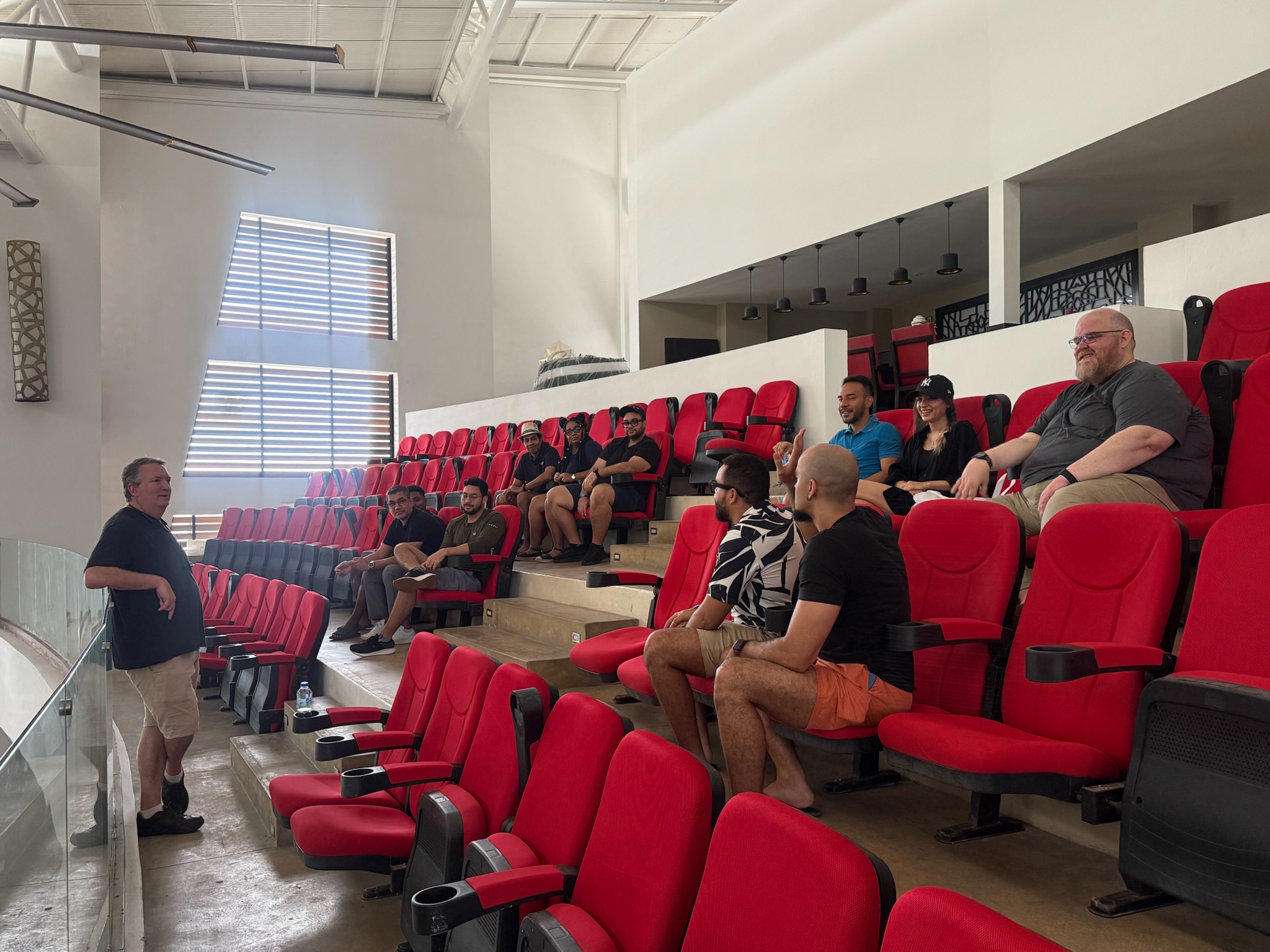
Just last month at our executive summit in Punta Cana, I had the opportunity to discuss these transformations with CTOs, CPOs, and CEOs from media and related industries. The conversations reinforced that while the technical aspects of AI integration are important, the human and organizational changes determine ultimate success.
Sezer and Kirim shaped those sessions around real implementation hurdles — how to balance AI automation with editorial judgment — rather than abstract frameworks.
The key is starting now. Every day of delay is a day your competitors gain advantage. Begin with small experiments, learn rapidly, and scale what works. The transformation may seem daunting, but the rewards—for organizations, engineers, and society—are immense.
Drawing from my experience across media and technology organizations, and my ongoing work advising AI companies like You.com and ScalePost AI since their founding, I’ve seen how the most successful transformations balance technical innovation with human-centered change management.
The future of engineering services isn’t about humans versus AI. It’s about humans with AI creating possibilities we can barely imagine today. That future is being written now, line by line, commit by commit, transformation by transformation.
Welcome to the new era of engineering. The code is being rewritten, and you’re holding the keyboard.


Behind the Punta Cana Summit, May 2025 Rapid-fire prototyping doesn’t happen by accident: Hanike, Ana Clara, and Ana Laura orchestrated partner outreach and on-site logistics, while Sezer and Kirim steered the technical and product themes that powered three days of momentum for our services roadmap.
This exploration is part of my series on technology leadership transformation. For the broader context of evolving CTO and CPO roles, see The CTO and CPO in the Age of Generative AI.
For insights specific to media industry transformation, read The Media Industry’s AI Transformation: From Newsrooms to AI-Powered Experience Engines.
I’m always interested in discussing these transformations with fellow technology, product, and business leaders. Connect with me on LinkedIn or visit rajiv.com to continue the conversation.
If you’re interested in how Flatiron Software can help your engineering capabilities or how Snapshot AI can be part of your productivity measurement, please reach out.